A student's journey, from first inquiry through application, assessment, offer, enrollment, and re-enrollment, should live in one coherent record. A modern Student Information System (SIS) connects admissions, academics, finance, student support, and communications so that every authorized team acts on shared, up-to-date information. It eliminates redundant data entry, inconsistent messaging, and manual reconciliation across spreadsheets or siloed tools. For international, bilingual, or multi-campus schools, it must also reflect complex realities: multiple names, guardians, addresses, visa statuses, language profiles, and evolving academic pathways. The goal is not just storing data, but enabling confident, coordinated action across the entire student lifecycle. This guide explains what a modern SIS should connect and why continuity matters more than storage alone for today's school leaders.
A school visit only lasts a few hours, so it pays to arrive prepared. This free two-page guide from NovaEd walks families through each stage of an open day or private tour. Page one covers what to do before you go: checking eligibility and entry year, building a shortlist of three to five schools, registering early, testing the journey at school-run time and deciding whether your child comes along. It also explains which kind of visit suits you and what to watch for on campus. Page two lists twenty questions worth asking about teaching, support, admissions, costs and daily life, followed by a simple grid for comparing up to three schools side by side. Print it or keep it handy.
Culture is the hardest thing to judge from a brochure, and often the thing that matters most to a child. It shows in small moments: how adults speak to students in the corridor, whose work is on the walls, how students talk about their own learning. A campus tour can look polished while daily life feels different. The NovaEd Campus Culture Check helps families and school leaders notice what brochures leave out, so shortlists rest on fit, belonging, and the lived experience of students rather than marketing language alone. Look for consistency between stated values and what you see in classrooms, corridors, and conversations with staff and students. Use those moments to ask better questions on your next campus visit.
School retention metrics show where families disengage, which students need support, and how connected data improves continuity and re-enrollment at scale. Strong retention reporting does more than track who left. It surfaces early signals across academics, attendance, wellbeing, billing, and family communication so leaders can act before a withdrawal request arrives. International, bilingual, and multi-campus schools need shared definitions, role-based views, and one student and family record so re-enrollment, support interventions, and leadership dashboards use the same trusted source. This guide explains which school retention metrics matter, how to avoid vanity indicators, and how connected operations turn insight into clearer decisions that protect continuity across the learner journey. Leaders can then act earlier with shared definitions and fully trusted reporting.
School Management SoftwareAdmissionsFinance
School Management Software That Connects Every Team
School management software connects admissions, finance, academics, and family communication in one record for clearer, more consistent operations daily. When each team works from a separate system, staff re-enter data, families repeat themselves, and leaders lose a single view of what is happening across the school. Connected school management software keeps the student and family record moving from inquiry through enrollment, learning, billing, and re-enrollment so handoffs stay reliable and status stays current. International, bilingual, and multi-campus schools especially need role-aware access without another silo. This guide explains what school management software should connect, which teams it must serve, and how one institutional record supports clearer operations without adding more tools to maintain. Continuity matters more than long feature lists.
When a parent submits an inquiry after an open house, that information should flow seamlessly to admissions, finance, and leadership, not live in silos. This article clarifies the distinct roles of school CRM and marketing automation: one manages longitudinal family relationships across the enrollment and student lifecycle; the other scales outreach, nurtures prospects, and measures campaign impact. The real question is not which tool to choose, but whether your school can operate from a single, unified, up-to-date record for each student and family, from first touch through enrollment, learning support, billing, re-enrollment, and retention. Integration quality matters more than feature count. This guide helps international and bilingual schools compare both systems and keep one family record connected end to end.
Families rarely start their school search with an application. They begin by comparing practical factors: location, curriculum, grade levels, fees, language support, admissions timelines, and perceived fit. A school directory listing is often the first place that comparison happens. If information is incomplete, outdated, or misaligned with the school's actual admissions process, promising interest can fade before a single conversation begins. For school leaders, the listing is more than marketing. It is a controlled, trackable entry point into the family journey. It must reflect institutional identity clearly, answer early-stage questions reliably, and guide families toward a meaningful next step, whether inquiry, tour, or application. This guide shows international schools what belongs on a directory listing and why completeness matters now.
Community EngagementFamily EngagementSchool Operations
Family Engagement Software That Keeps Schools Connected
When admissions, finance, academics, and student support operate in disconnected systems, families face fragmentation: repeated data entry, misdirected notices, delayed payment updates, and inconsistent messaging. True family engagement software is more than another app. It unifies workflows around the student and household record. It ensures admissions updates reflect real-time application progress, fee balances sync with finance postings, and wellbeing notes trigger coordinated follow-up. This consistency builds trust, reduces staff friction, improves enrollment confidence, supports timely payments, and strengthens retention, all by making information accurate, accessible, and action-oriented across the entire student journey. This guide explains how international and bilingual schools can choose family engagement software that keeps every department connected to one shared trusted household record from start to end.
School EnrollmentDigital EnrollmentFinance
Digital Enrollment That Keeps School Data Connected
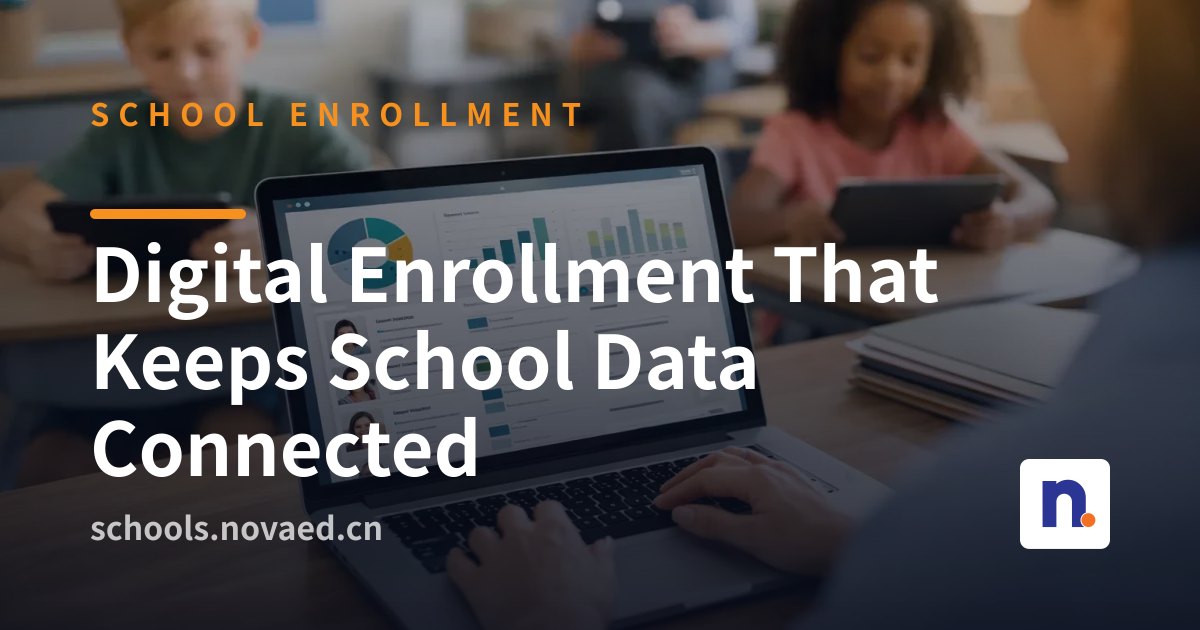
Digital enrollment is more than online forms and e-signatures. It is about continuity across the entire family journey. From first inquiry to active student status, data should flow seamlessly between marketing, admissions, finance, and academic teams. A connected system eliminates redundant entry, reduces manual handoffs, surfaces blockers early, supports multilingual families, adapts to grade- and program-specific requirements, and links admissions decisions directly to financial actions. When records are fragmented across tools, schools lose real-time visibility, delay family communication, and increase operational risk, especially during peak periods or multi-campus growth. The goal is a unified, role-aware workflow that saves staff time while building family trust through clarity, consistency, and control. This guide shows schools how to keep that continuity fully connected.10
Artificial IntelligenceAdmissionsAI in Education
AI Admissions: Better Decisions, Not Faster Rejections
AI in admissions does not replace human judgment. It strengthens it. By automatically checking document completeness, consolidating records from transcripts to interviews, summarizing multilingual inputs, and surfacing context at the right moment, AI helps admissions teams act with greater consistency and clarity. It reduces administrative friction without compromising ethical responsibility. The system flags gaps, prepares reviewers, and improves family communication, but never decides who belongs. That decision remains grounded in professional expertise, contextual understanding, and institutional values. For schools managing complex inquiries across languages, curricula, and campuses, AI's role is operational support, not autonomous authority. This guide explains how international and bilingual schools can use AI for better admissions decisions without turning the whole process into simply faster automated rejections.