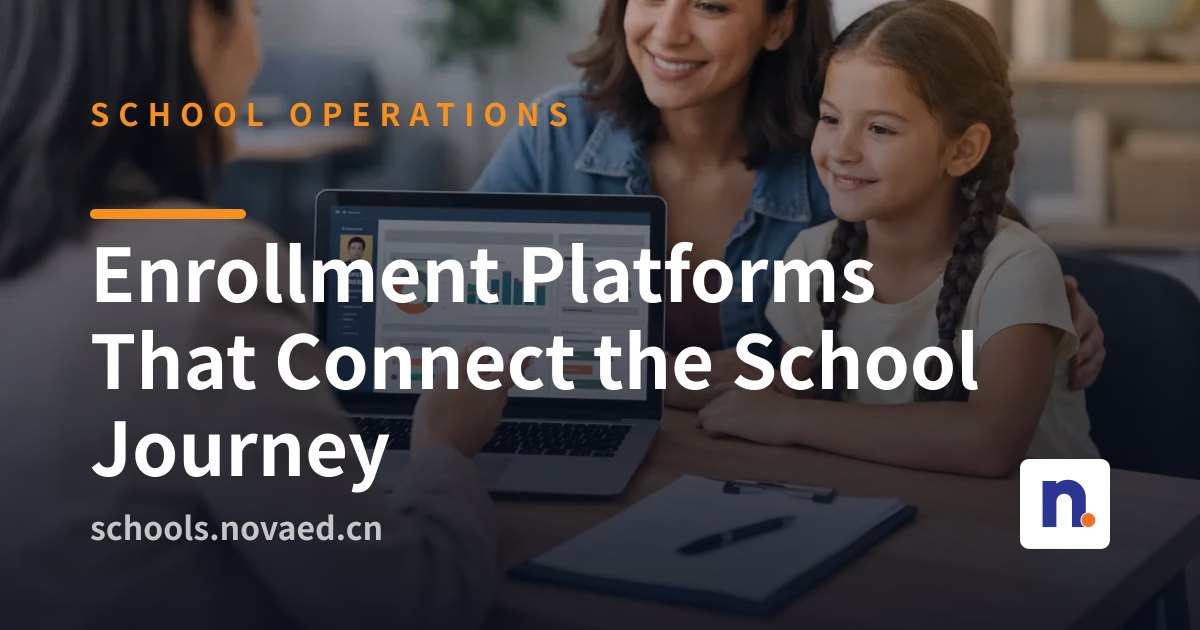
Enrollment platforms that connect the school journey treat admissions as the start of an institutional relationship, not a standalone database. They link inquiry, application, assessment, offers, contracts, invoices, student records, parent communication, and re-enrollment on one student and family record so teams stop reconciling exports and families stop repeating themselves. For international and bilingual schools, that continuity matters because placement, fees, language support, and multi-contact households rarely fit a simple form funnel. This guide explains what connected enrollment platforms should do, where standalone tools break the journey, and how leaders can evaluate platforms by handoff quality, data continuity, and clarity for families from first inquiry through the years that follow. Finance, academics, and retention should stay connected after formal enrollment.
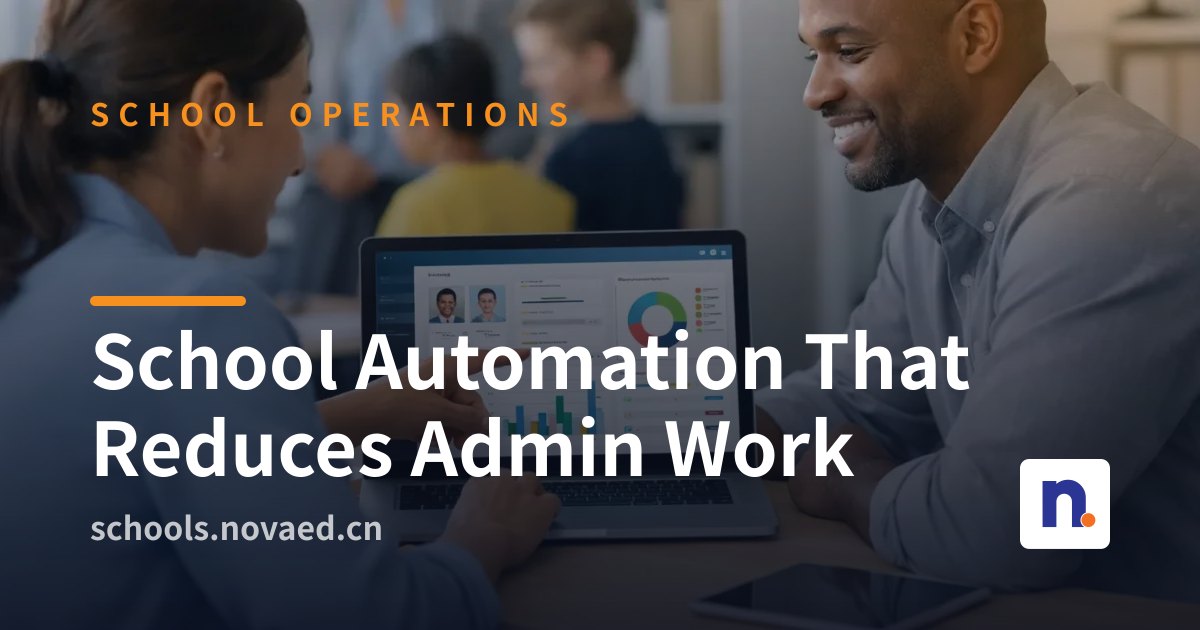
School automation that reduces admin work is not another dashboard layered onto fragmented tools. It is the removal of duplicate entry, manual handoffs, and spreadsheet chasing across admissions, enrollment, billing, student records, and parent communication. When staff spend hours reconciling the same family across systems, families wait longer for simple answers and leaders lose a clear view of school operations. Effective automation keeps judgment with people and puts structure around repeatable steps: routing inquiries, collecting documents, updating statuses, triggering invoices, sending reminders, and keeping every action on one student and family record. This guide explains where admin work accumulates, which processes to automate first, and how connected school management platforms reduce operational load without making the school feel truly impersonal.
An inquiry can arrive anytime, after an open day, via a campaign form, through a parent referral, or during school holidays. When inquiries land across spreadsheets, shared inboxes, and disconnected CRMs, timely follow-up depends on individual effort, and families experience the same fragmentation that burdens staff. Automating admissions follow-up is not about replacing human connection with generic emails. It is about building structure: responding quickly, communicating with relevance, and keeping every interaction on the student and family record. Done well, automation protects meaningful work: understanding family needs, assessing student fit, and guiding enrollment decisions carefully. Start by unifying inquiry data, mapping enrollment journeys, segmenting thoughtfully, prioritizing speed over impersonation, targeting stall points, assigning tasks, and connecting admissions to school workflows.
School Operationsenrollment workflowschool technology
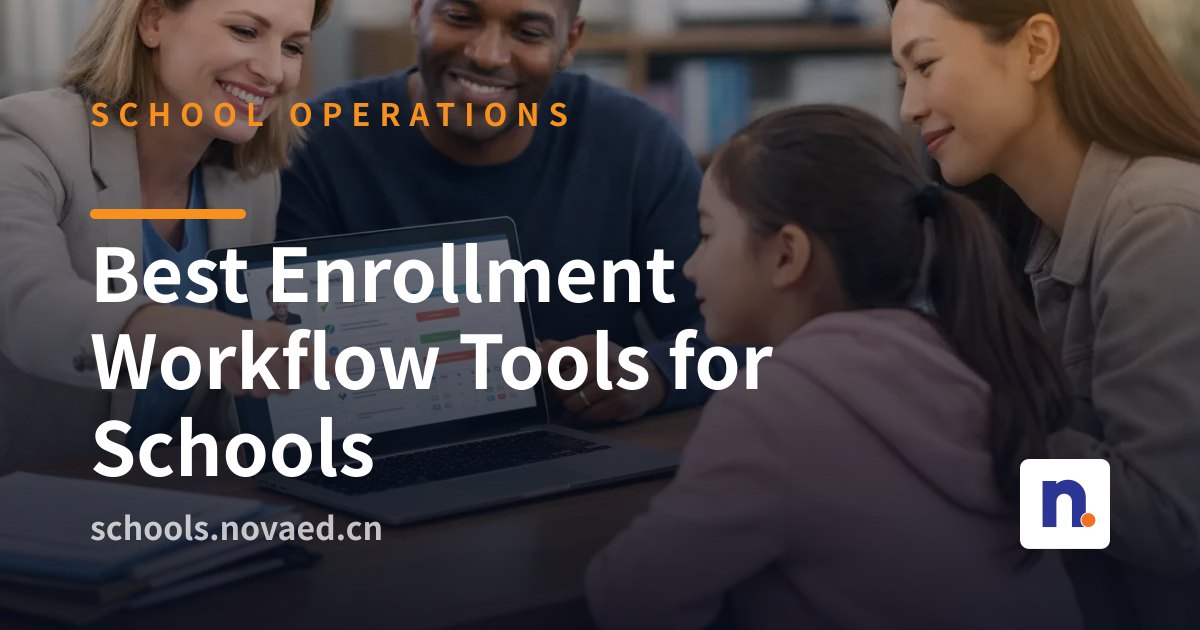
An enrollment team should not need to search three systems, two spreadsheets, and an email thread to answer a parent’s simple question: What happens next? Yet this is still the daily reality at many schools. The best enrollment workflow tools bring inquiry, application, assessment, admissions decisions, contracts, invoices, and parent communication into a connected process built around one student and family record. For school leaders, the question is not simply which tool has the longest feature list. The right choice depends on whether the system removes handoffs between teams, preserves data continuity, and gives families a clear path from first inquiry through enrollment. This guide compares operating models and shows what capabilities separate strong platforms from basic trackers across schools.
Parent InsightInternational SchoolsSchool Choice
How to Shortlist International Schools Without Relying on Rankings
School rankings cannot reflect your child’s reality: commute time, family budget, eligibility rules, and desired university pathway are the true filters. What matters more are leadership and staff stability, recognized accreditation such as CIS or WASC, how the school supports average or language-learning students, and the authentic feel of daily life on campus. A strong shortlist is not built by sorting scores. It is built by eliminating what does not fit, then deeply investigating the remaining three or four schools where your child could genuinely thrive. Rankings may surface names, but only your family’s grounded, firsthand inquiry can identify the right fit. This guide shows families how to shortlist international schools with practical filters instead of published school league tables.
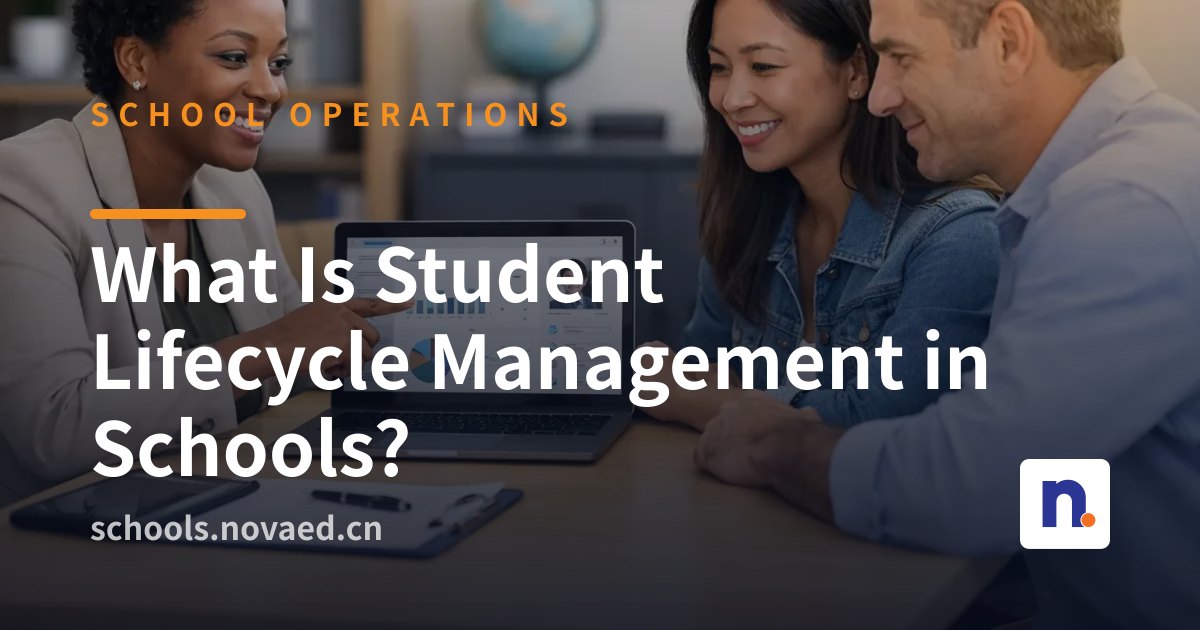
Student lifecycle management is how a school stays coherent from first inquiry to alumni, instead of restarting the family story in a new system at every handoff. In practice it connects admissions, enrollment, learning records, billing, re-enrollment, and ongoing family communication on one operational thread. This explainer defines what student lifecycle management means for international and bilingual schools, which stages matter most, where fragmentation usually begins, and what leaders should expect from a connected school management approach. It is written for admissions, academic, and operations teams who need clearer ownership across the journey without treating each department tool as a separate school. The aim is continuity for families and clearer evidence for leadership across years, campuses, and day-to-day operational roles.
School OperationsAdmissions ToolsSchool Operations
Most schools do not lose enrollment for lack of inquiries. They lose it in the quiet gap between first contact and application, when follow-up is slow, generic, or disconnected from admissions. Lead nurturing tools help close that gap with timed sequences, clearer ownership, and better visibility into which families are still engaged. This guide defines what best should mean for school enrollment teams: speed, relevance, stage-aware messaging, clean handoffs between marketing and admissions, and reporting that connects nurture activity to applications and deposits rather than vanity open rates. It shows how international and bilingual schools can evaluate tools against the enrollment funnel, keep family context on one record, and recognize when a standalone nurture stack leaves the student journey fragmented.
A school admissions CRM is good at capturing inquiries and moving prospects through a pipeline. That is useful, and it is not the whole job. Once a family applies, schools still need documents, assessments, offers, deposits, class placement, invoices, and a lasting student record. When those steps sit in other tools, the CRM becomes another silo: staff re-enter data, families repeat themselves, and leadership loses a single view from first contact to enrollment. This piece names what an admissions CRM cannot do alone, and what international and bilingual schools should expect from a connected school management platform instead.
School Operationsre-enrollmentschool operations
School Re-Enrollment Management Software That Connects
A returning family should not feel like it is applying to a new school — yet many schools still manage re-enrollment using spreadsheets, email threads, paper forms, and siloed billing systems. Modern re-enrollment software bridges admissions, student records, finance, and communications into one connected workflow. It carries forward each student’s full history — academic details, family contacts, billing status, and preferences — enabling accurate forecasting, timely class placement, proactive follow-up with undecided families, and clear visibility across departments. When renewal is disconnected, leaders act on incomplete data; when connected, every decision — from deposit collection to grade-level placement — flows from a single, up-to-date record.
Low enrollment conversion is rarely due to lack of family interest—it’s often caused by operational gaps: a missed follow-up, an assessment result stuck in isolation, or an invoice without clear next steps. Improving conversion starts with viewing the family journey as one continuous experience—not a sequence of departmental handoffs. This means aligning marketing, admissions, academics, finance, and family services around shared definitions, connected data, timely bilingual communication, frictionless application workflows, and credible offer delivery. Measuring drop-off points stage-by-stage—and distinguishing necessary academic delays from avoidable administrative bottlenecks—is essential for schools serving diverse families across international, bilingual, IB, British, American, and multi-campus settings.